Portrait to come
Dr. Elena Rostova
Principal Investigator & Senior Hydrology Fellow
Freshwater Biogeochemistry
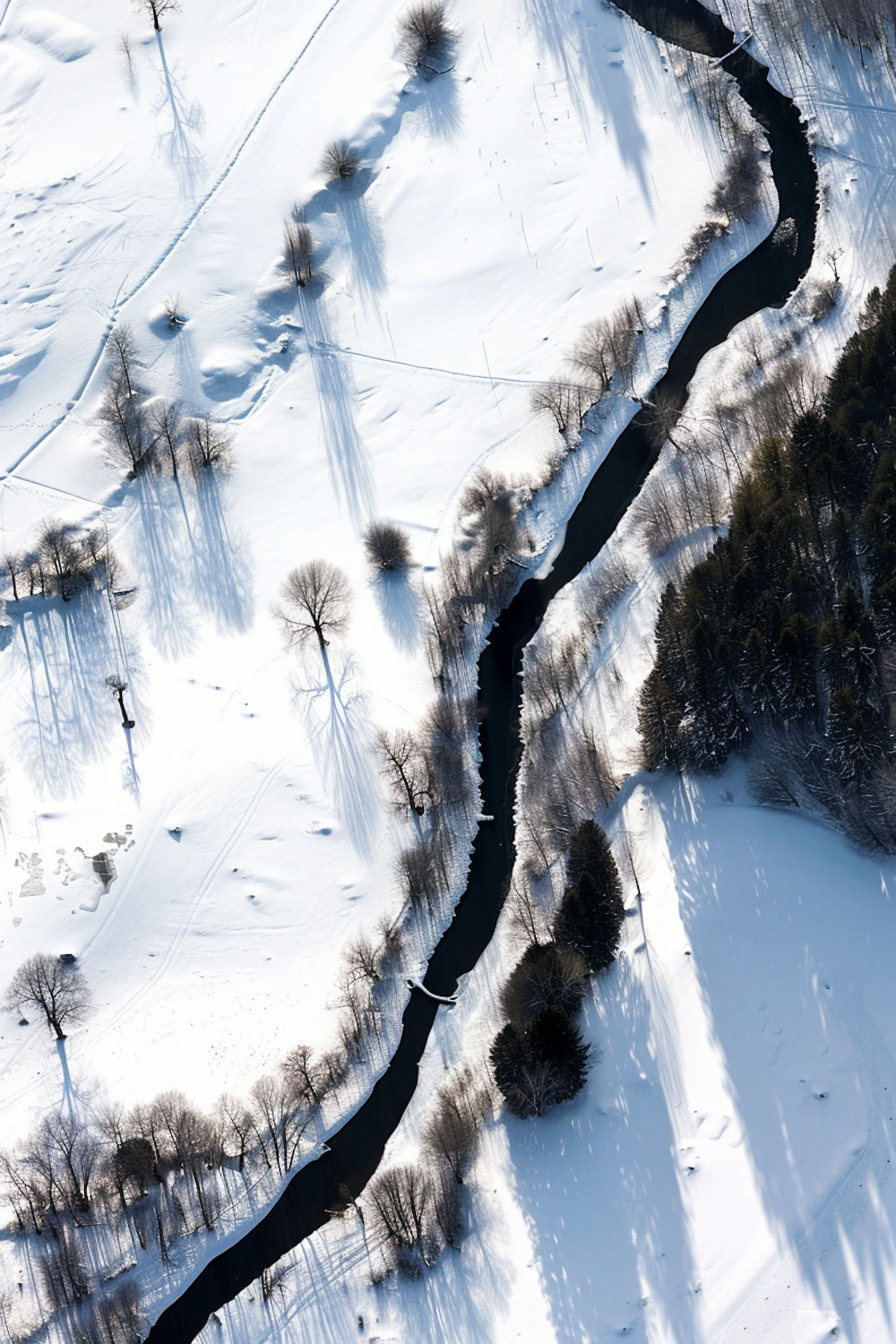
Multi-decadal tracking of thermal regime shifts, active-layer thaw, and solute transport across subarctic braided river networks.
How do anomalous spring thermal pulses and accelerated permafrost thaw transform carbon solute mobilization and benthic macroinvertebrate drift in subarctic catchments?
Initiated in 2021, the Freshwater Systems investigation tracks biogeochemical fluxes across subarctic drainage networks. By integrating autonomous hydrometric loggers with high-frequency dissolved organic matter spectrofluorometry, our research team isolates the chemical signature of thawing active layer soils before nutrients reach downstream lacustrine sinks.
The multi-year dataset bridges catchment-scale hydrologic modeling with benthic biodiversity surveys, providing public resource agencies with predictive models for post-breakup water chemistry.
Mackenzie Basin Field Corridor (61°18'N 120°34'W)
The Mackenzie Basin Field Corridor spans 380 km of unregulated boreal braided channels, characterized by permafrost discontinuous zones, steep glaciofluvial banks, and extreme seasonal thermal variability ranging from -42°C in January to +28°C in July.

How the evidence was gathered, step by step.
High-frequency acoustic Doppler current profiling (ADCP)
Excitation-emission matrix spectrofluorometry of organic carbon
Continuous optical dissolved oxygen and temperature telemetry
DNA metabarcoding of benthic macroinvertebrate drift assemblages
Preliminary synthesis across four hydrologic cycles indicates that early-season thermal pulses trigger a 34% increase in aromatic carbon mobilization, preceding the peak hydrograph by up to nine days. These findings have been integrated into regional watershed advisory models and published in the Journal of Hydrological Ecology.
Dr. Elena Rostova, Dr. Marcus Vance, Prof. T. K. Bergmann
Cite as
Rostova, E., Vance, M., & Bergmann, T. K. (2025). Thermal stratification and nutrient pulses during unseasonal snowmelt in subarctic river basins. Journal of Hydrological Ecology, 48(3), 182-199.
CIREE Field Methods Working Group (Ed. Dr. Marcus Vance)
Cite as
Vance, M. et al. (2024). Catchment sediment flux monitoring protocol: Field acoustic sensing and manual grab sample integration. CIREE Technical Guidance Series, Monograph No. 14, 1-64.

Next chapter
Forest Ecology & Canopy Buffering