Portrait to come
Dr. Elena Rostova
Principal Investigator & Senior Hydrology Fellow
Freshwater Biogeochemistry
About CIREE
CIREE, the Centre for Interdisciplinary Research in Ecology & Environment, works across ecology, environment, field research and interdisciplinary knowledge, and carries that work into outreach and public engagement.
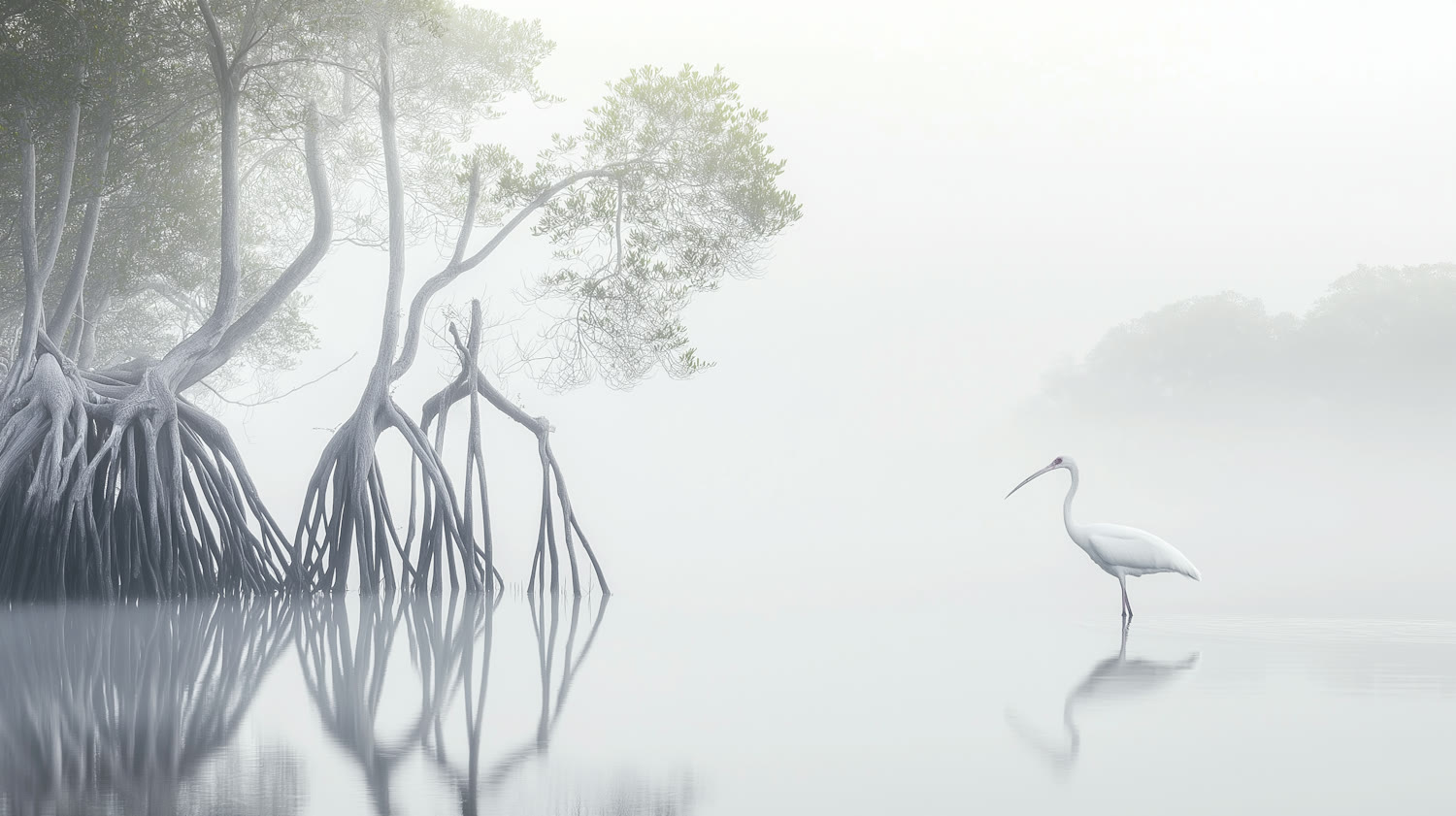
Fig. 01 / Minas Basin intertidal saltmarsh at dawn — Long-term accretion monitoring.
To understand how ecological and environmental systems work and change, by starting in the field, working across disciplines, and sharing what is learned openly.
Interdisciplinary approach
Interdisciplinary research is a practice as much as a principle. These are the habits that shape how CIREE projects are designed and shared.
Questions are grounded in direct observation of real places, species and systems, and return to them for evidence.
Ecology and environmental science work alongside other fields of knowledge, because the systems being studied do not respect disciplinary lines.
Close, careful observation and systems-scale analysis are treated as two views of the same question.
What is learned is shared with students, partners, communities and the public, not only with other researchers.
Methods
The kinds of methods CIREE projects draw on. Each project page lists the methods it actually used.
Surveys, transects and repeat visits that record how places and populations change over time.
Water, soil, sediment and biological samples, collected carefully and analysed to a clear protocol.
Maps, remote sensing and spatial analysis that place each observation inside its landscape.
Bringing evidence together across sites, seasons and disciplines to see the larger pattern.
Working with the people who live in, manage and care about the places being studied.
People
Researcher-led profiles with disciplines, areas of focus and selected work.
Meet the peopleCollaborations
CIREE welcomes collaboration with researchers, institutions, funders and communities who share an interest in how living systems work and change. A collaboration can begin with a shared question, a dataset, a field site or a public programme.
Partner organisations will be listed here once confirmed.

Fig. 03 / Cypress Hills prairie transect — Paired lysimeter hydrology array.
Outreach
Outreach and public engagement are part of the work, not an afterthought: programmes, events and conversations that open research to everyone it concerns.
Outreach and contact